Rebuilt with an honest look at a genuinely contested safety debate, plus 5 verified current picks
Search “tea tree oil dogs” and you’ll land on two completely different pages within the same click. One tells you it’s a gentle, effective remedy for itchy skin. The other calls it toxic and tells you to avoid it entirely. Both are citing real evidence. The actual answer sits in between, and it comes down almost entirely to one factor: concentration.
The toxicity cases that built tea tree oil’s dangerous reputation — the ones behind a 2014 study covering 337 dogs and 106 cats — involved 100% undiluted essential oil applied directly, not the 0.1-1% concentrations used in commercial dog shampoos. Some established, credible pet-health sites still recommend avoiding tea tree oil in any form as the safest default. That’s a legitimate position, not a fringe one. Other sources point to the concentration distinction and note that much of the ingredient’s toxic reputation traces back to a period when synthetic or adulterated “tea tree oil” products circulated on the market — not genuine, properly diluted oil.
Where that leaves you: a well-formulated shampoo at a checkable low concentration is a different product than raw essential oil, and treating them as identical risk levels isn’t accurate. But if you’d simply rather avoid the ingredient altogether given the disagreement, that’s a defensible choice too — this isn’t a case where one side is just wrong.
Never use tea tree oil products on cats. Cats lack the liver enzymes to metabolize many compounds in tea tree oil, which makes them far more sensitive than dogs even at low concentrations. Multiple dog-specific shampoo manufacturers state this directly — one product listing puts it plainly: “due to the tea tree oil content of this shampoo, it is not safe to use on cats.” In a multi-pet household, keep tea tree products completely separate. Watch for tremors, weakness, drooling, low body temperature, or difficulty walking after any exposure, in dogs or cats, and call your vet or an animal poison control line immediately if you see them.
Editor’s Pick

Last update on 2026-08-19 / Affiliate links / Images from Amazon Product Advertising API
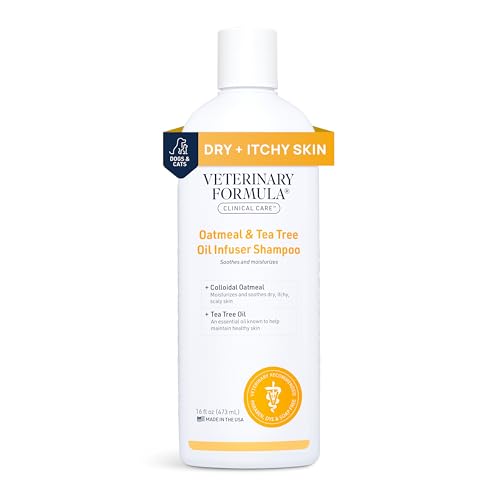
From SynergyLabs, a manufacturer with real, established credibility in this category. Rated 4.7 stars across 3,341+ reviews, with the cat-safety warning stated directly on the label rather than buried or omitted.
- ConcentrationLow, formulated for daily-to-weekly use
- Cat-SafeNo — explicitly stated on packaging
- Age12 weeks and up
What’s Inside!
What Actually Matters Before You Buy
Concentration. Check the label if it’s listed. Most commercial shampoos sit around 0.1-1%. Anything marketed as pure or undiluted tea tree oil is not meant for direct application and shouldn’t be treated as a shampoo alternative.
Species specificity. A shampoo labeled for dogs only should stay away from cats in the household, full stop. Some formulations are explicitly cat-safe at their diluted concentration; others explicitly aren’t. Check the specific product, not the general ingredient.
Age restrictions. Many tea tree formulations set a 12-week minimum age. Puppies younger than that generally need a gentler, tea-tree-free shampoo instead.
Contact time. Several products need 5-15 minutes on the skin to actually work rather than a quick rinse. Check the specific instructions — a shampoo that needs 10 minutes and gets 30 seconds won’t deliver the results a review promised.
Tea Tree Oil Shampoo Comparison Table


Last update on 2026-08-19 / Affiliate links / Images from Amazon Product Advertising API
Tea Tree Oil Shampoo Reviews
1. Veterinary Formula Clinical Care (Best Overall)
Best Overall
Last update on 2026-08-19 / Affiliate links / Images from Amazon Product Advertising API
- ConcentrationLow, formulated for daily-to-weekly use
- Cat-SafeNo — explicitly stated on packaging
- Age12 weeks and up
The cat-safety statement is right there on the listing, not something you have to dig for. That transparency, paired with an established manufacturer and a 4.7-star rating across 3,341+ reviews, is the actual reason this earns the top spot.
Colloidal oatmeal handles the hydration side while tea tree oil targets bacterial and fungal skin issues. The instructions call for a 10-15 minute soak, not a quick lather-and-rinse — skip that step and you’re not getting what the reviews are describing.
It’s a straightforward, no-frills formula. If you want organic certification or a specific brand story behind your purchase, look further down this list.
Pros
- Cat-safety warning stated directly, not buried
- Strong review volume from an established manufacturer
- Dual-action oatmeal and tea tree formula
Cons
- Needs a full 10-15 minute contact time to work as described
2. 4-Legger (Best Organic-Certified)
Best Organic-Certified
Last update on 2026-08-19 / Affiliate links / Images from Amazon Product Advertising API
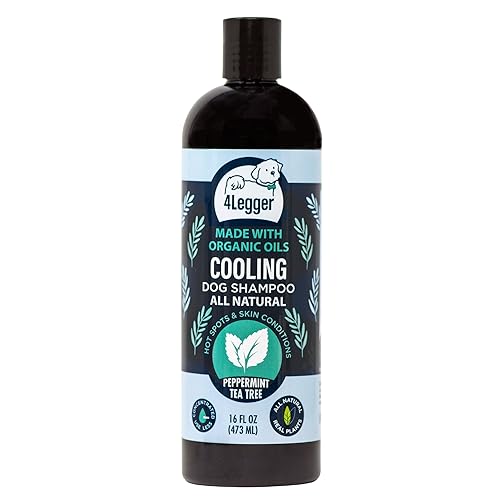
- ConcentrationLow, organic tea tree essential oil blend
- CertificationUSDA Certified Organic
- Best ForBuyers who want third-party ingredient verification
A woman-owned company founded in 2015 after the founder lost a dog to cancer. That background shaped the product: USDA National Organic Program certification, a federal, third-party-verified standard, not a marketing word. The company states only about 2% of dog shampoos on the market carry this certification — that’s a company claim, not an independently audited statistic, though the USDA certification itself is independently verifiable.
One customer account, shared directly on the product page: an owner whose cattle dog had battled recurring yeast and bacterial skin infections for years switched to this after her vet suggested trying it instead of another round of harsher chemical treatment. She described it as exactly what the dog needed.
The peppermint and eucalyptus blend gives it a distinct cooling effect beyond plain tea tree alone — a deliberate formulation choice, not just a scent.
Pros
- Real, federally certified organic status
- Verifiable brand origin story
- Cooling peppermint-eucalyptus blend beyond plain tea tree
Cons
- Premium pricing versus mass-market alternatives
3. Kenic (Best for Persistent Skin Issues)
Best for Persistent Skin Issues
Last update on 2026-08-19 / Affiliate links / Images from Amazon Product Advertising API
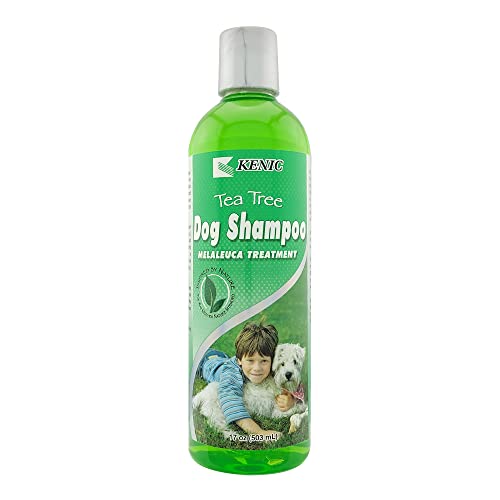
- ConcentrationLow, plus vitamin blend
- Cat-SafeNo — labeled “for dogs only”
- Best ForDandruff, seborrhea, persistent itching
Made by Glo-Marr, a Kentucky manufacturer with over 50 years in pet grooming products. The label states plainly this is for dogs only, which matters more than usual if there’s a cat in the house.
Real reviews are genuinely mixed. One owner reports a noticeable improvement in their Chihuahua’s coat and skin condition. Another describes the opposite: the shampoo stung an existing papercut on their own hand, they couldn’t detect any tea tree scent at all, and they wouldn’t buy it again. Both are documented, verified-purchase accounts, not cherry-picked.
Multiple reviewers do specifically credit it with sustained relief for dogs with ongoing skin irritation rather than a one-time wash improvement.
Pros
- 50+ year manufacturer with deep category experience
- Multiple reports of sustained relief for persistent skin issues
- Explicit dogs-only labeling
Cons
- At least one documented account of the formula stinging broken skin, with no detectable tea tree scent
4. Earthbath (Best for Hot Spots)
Best for Hot Spots

Last update on 2026-08-19 / Affiliate links / Images from Amazon Product Advertising API
- ConcentrationLow, mild formula
- Cat-SafeYes — labeled safe for all animals over 6 weeks
- Best ForHot spots, flea-bite reactions
One documented customer account: a dog with a severe flea allergy lost most of the hair on the back half of his body, visible skin showing underneath. His owner needed prescription steroid pills, steroid spray, and twice-weekly medicated baths just to get the inflammation under control. Once that inflammation started resolving, they introduced this shampoo alongside the medicated bath, and eventually replaced the medicated shampoo with it entirely after talking to their vet. The coat grew back except for two small calluses.
That’s one detailed account, not a guarantee — but it points to a real use case: this as a step-down maintenance product once a more serious skin issue is already under control, not necessarily the first thing to reach for on day one of a flare-up.
It’s explicitly labeled safe for animals over 6 weeks, cats included, and won’t wash off topical flea treatments — a practical detail if your dog is on a monthly flea preventive.
Pros
- Detailed account of successful use for a severe flea-allergy case
- Labeled safe for cats at this concentration
- Won’t interfere with topical flea treatments
Cons
- Best suited as maintenance once acute inflammation is already under control
5. Vet’s Best (Best Vet-Formulated)
Best Vet-Formulated

Last update on 2026-08-19 / Affiliate links / Images from Amazon Product Advertising API
- ConcentrationLow, oatmeal-tea tree combination
- Best ForDandruff, seasonal flare-ups
- Brand HistoryOver 30 years
A senior foster dog arrived with fleas and dermatitis, his back red and feverish, fur thinned to almost nothing from mid-back to the base of his tail, sensitive enough that touch alone caused discomfort. An oatmeal shampoo alone didn’t move the needle. Switching to this one did — the owner reported the dog was noticeably more comfortable after the very first use, with the fever and redness resolving within three to four washes.
Vitamin B5 rounds out the aloe and tea tree combination, aimed specifically at dandruff and seasonal skin flare-ups rather than a single acute issue. Over 30 years in this specific product category is a checkable brand history, not a new entrant guessing at a formula.
It’s a solid, broadly-applicable pick — not narrowly specialized the way the hot-spot or organic-certified options above are.
Pros
- Detailed recovery account for a severe dermatitis case
- Over 30 years of category-specific brand history
- Broadly useful for dandruff and seasonal flare-ups
Cons
- Less specialized than picks built for one specific problem
Which Tea Tree Oil Shampoo Should You Buy?
| Situation | Pick |
|---|---|
| Not sure where to start | Veterinary Formula Clinical Care |
| Want third-party organic certification | 4-Legger |
| Persistent dandruff or seborrhea | Kenic |
| Hot spots, flea-bite reactions, multi-pet household with cats | Earthbath |
| Seasonal flare-ups, general dandruff | Vet’s Best |
Tea Tree Oil Shampoo FAQ
Is tea tree oil actually safe for dogs?
It depends entirely on concentration. Documented toxicity cases involved 100% undiluted essential oil, not the 0.1-1% concentrations in commercial shampoos. Some credible sources still recommend avoiding it entirely as the safest default — that’s a reasonable position, not a wrong one. A well-formulated, properly diluted shampoo and raw essential oil are not the same risk level.
Can I use tea tree oil shampoo on my cat?
Not unless the specific product is explicitly labeled cat-safe. Cats lack the liver enzymes to process many compounds in tea tree oil, making them far more sensitive than dogs even at low concentrations. Check the label for every product in a mixed-pet household — some tea tree formulations are labeled safe for cats, others explicitly aren’t.
What does tea tree oil poisoning look like in a dog?
Watch for tremors, muscle weakness, drooling, low body temperature, or difficulty walking. These symptoms typically follow ingestion or exposure to concentrated, undiluted oil rather than a properly diluted shampoo used as directed. Call your vet or an animal poison control line immediately if you see them.
How long should I leave tea tree shampoo on my dog?
Check the specific product’s instructions — several call for 5 to 15 minutes of contact time to actually deliver the results described in reviews, not a quick lather-and-rinse. A shampoo left on for 30 seconds won’t perform the way a 10-minute soak does, even if it’s the same product.
Final Thoughts
Concentration is the real dividing line in this debate, not the ingredient itself. A well-formulated commercial shampoo at 0.1-1% and raw essential oil are different products with different risk profiles. Keep any tea tree product away from cats unless it’s explicitly labeled otherwise, check the age restriction before using it on a puppy, and give it the full contact time the label specifies rather than a quick rinse.
Helpful article thanks.