Rebuilt with corrected sleep-sharing data, real material science, and 6 verified current picks
If your dog sleeps in your bed, the fabric you pick matters more than the thread count on the tag. Here’s the material science most guides get slightly wrong: microfiber isn’t actually the top performer for hair resistance — tight-weave, smooth fabrics like cotton percale and sateen release hair more completely, while lower-quality or loosely-woven microfiber can trap it via static.
Co-sleeping with a dog is common enough that this matters for a lot of households — APPA’s National Pet Owners Survey puts it at 43%, with newer surveys running as high as 74-78% depending on methodology. (A widely-repeated “55%” figure floating around actually traces back to cat owners, not dogs.) Below, we cover what actually works by material, plus 6 current picks across percale, sateen, bamboo, and silk.
Editor’s Pick
Last update on 2026-08-19 / Affiliate links / Images from Amazon Product Advertising API
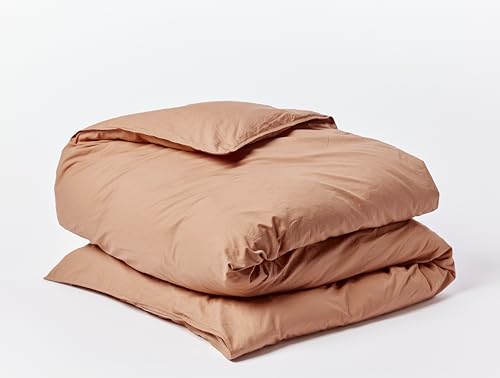
Coyuchi’s percale weave is exactly the tight, smooth fabric structure that releases hair rather than trapping it, backed by real GOTS organic certification from a small, established artisan brand rather than a generic import.
- Material100% GOTS-certified organic cotton, percale weave
- Available SizesTwin, Full/Queen, King
- Best ForGreat hair-release performance
What’s Inside!
How to Choose the Right Duvet Cover Material

The real, unifying factor across all fabric types isn’t the specific material name — it’s weave tightness and surface smoothness. Hair sticks to loose, fuzzy, or statically-charged fabrics and releases easily from smooth, tightly-woven ones, whether natural or synthetic.
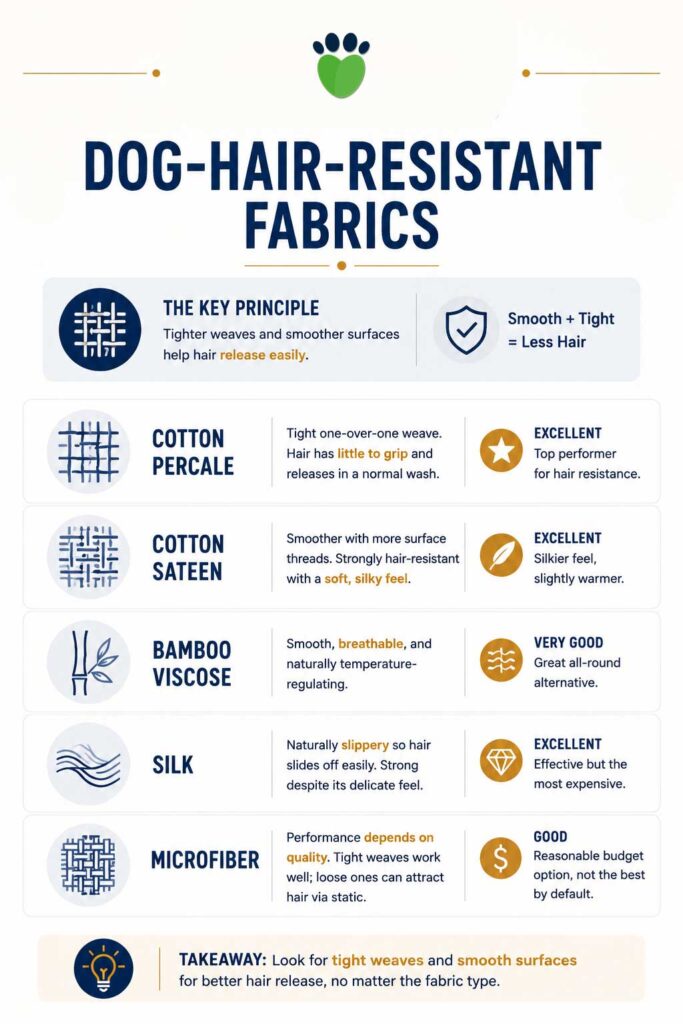
Cotton percale uses a tight, one-over-one weave that gives hair almost nothing to grip, and releases what does cling in a normal wash. This is one of the best-performing materials for hair resistance specifically, not just a “nice to have.”
Cotton sateen uses a different weave that places more threads on the surface, creating a smoother, slightly heavier fabric with a soft sheen — also strongly hair-resistant, with a different feel than percale (silkier, slightly warmer).
Bamboo viscose is a real alternative worth considering — smooth, breathable, and naturally temperature-regulating, which matters if your dog adds noticeable warmth to the bed at night.
Silk is naturally slippery, which does help hair slide off, and has real tensile strength despite its delicate feel. It’s effective, just the most expensive option here.
Microfiber is not the top performer the way it’s often marketed to be — high-quality, tightly-woven microfiber works reasonably well, but lower-quality or loosely-woven versions can actually attract more hair via static, especially in dry climates. It remains a reasonable budget option, just not automatically “the best.”
A common, often-repeated bedding-marketing exaggeration worth knowing: “up to 1000 thread count” claims are usually misleading. Honest, high-quality single-ply cotton rarely exceeds 400-600 real thread count — anything claiming 800-1000+ typically uses multi-ply threads counted individually, a well-known deceptive practice in the bedding industry. A real 300-400 thread count percale or sateen performs excellently; don’t chase inflated numbers.
One More Practical Thing to Check
If you’re dealing with more than just hair — vomiting, accidents, or muddy paws — a waterproof mattress protector or throw underneath the duvet cover is worth adding, since no duvet cover material fully protects against liquid reaching your mattress. Also check your washing machine’s drum capacity before buying a full-size duvet cover; most need at least a 4.5 cubic foot capacity to wash and rinse a large comforter cover properly, especially once it’s carrying a real load of dog hair.
Duvet Cover for Dogs Comparison Table




Last update on 2026-08-19 / Affiliate links / Images from Amazon Product Advertising API
Duvet Cover Reviews, by Material
1. Coyuchi (Best Percale)
Best Percale
Last update on 2026-08-19 / Affiliate links / Images from Amazon Product Advertising API
- Material100% GOTS-certified organic cotton, percale weave
- Available SizesTwin, Full/Queen, King
- Best ForGenuine hair-release performance
Coyuchi’s percale weave is exactly the tight, smooth structure that releases hair well, rather than being a generic “premium” claim. The fabric is loomed with varying tension and then washed to create a lightly crinkled texture that’s soft right out of the box, no break-in period needed.
It’s real GOTS-certified organic cotton, grown and woven in India, from a small business brand rather than a mass-market import. Cold machine wash and low tumble dry keep care simple despite the premium positioning.
It’s priced above budget microfiber options, but the combination of real hair-release performance and real organic certification justifies it for anyone prioritizing both.
Pros
- Tight percale weave — real hair-release performance
- GOTS-certified organic cotton
- Soft without a break-in period
Cons
- Pricier than budget microfiber options
2. California Design Den (Best Sateen)
Best Sateen
Last update on 2026-08-19 / Affiliate links / Images from Amazon Product Advertising API
- Material100% cotton, 400 thread count sateen
- Available SizesFull/Queen, King, and more
- Best ForSmoother feel with real hair resistance
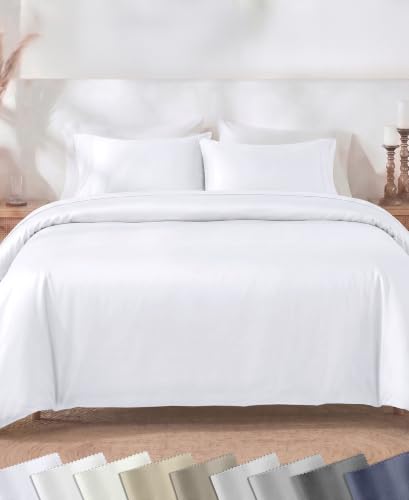
This is a real, independently-recognized standout — a real 2025 Good Housekeeping Best Bedding Award winner, not just a marketing claim on the listing. The sateen weave gives a smoother, slightly warmer feel than percale while still offering real hair-release performance.
At a real, honest 400 thread count, this avoids the inflated “800-1000+” claims common in this category, while still delivering real softness and durability. Button closure with corner ties keeps the duvet insert securely in place.
Sateen’s smoother, warmer feel is a real tradeoff versus percale’s crisper, cooler character — pick based on which you’d actually prefer to sleep in.
Pros
- Independently verified — real Good Housekeeping Award winner
- Honest 400 thread count, not an inflated claim
- Smooth sateen feel with real hair resistance
Cons
- Warmer than percale — less ideal for hot sleepers
3. DOZ by SIJO (Best Bamboo)
Best Bamboo
Last update on 2026-08-19 / Affiliate links / Images from Amazon Product Advertising API
- Material100% organic bamboo viscose, sateen weave
- Available SizesFull/Queen, King/Cal King
- Best ForTemperature regulation with a dog in bed
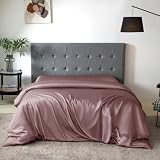
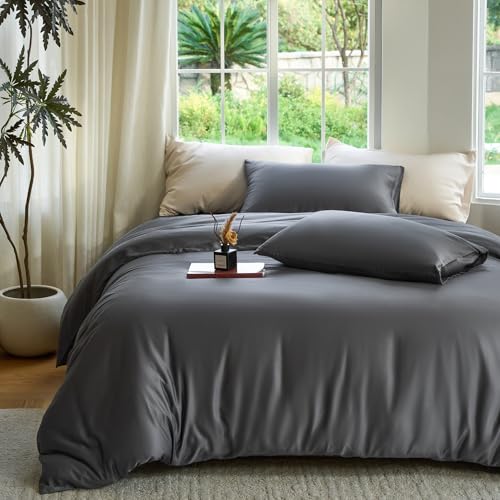
This is a distinctly different, real material option most duvet-cover guides skip entirely — organic bamboo viscose, OEKO-TEX Class 1 certified, with the same smooth-surface hair-resistance principle as cotton sateen but a distinctly cooling, moisture-wicking feel.
The real advantage here is temperature regulation — if your dog adds noticeable warmth to the bed overnight, bamboo’s breathability helps more than a standard cotton weave. At 300 thread count and 145 GSM, it’s substantial rather than flimsy.
It’s a smaller, specialty brand rather than a mass-market name, which means a real price premium for the material and certification.
Pros
- Organic bamboo, OEKO-TEX certified
- Real cooling, moisture-wicking performance
- Same hair-resistant smooth-weave principle as sateen
Cons
- Price premium versus mass-market cotton options
4. THXSILK (Best Silk)
Best Silk
Last update on 2026-08-19 / Affiliate links / Images from Amazon Product Advertising API
- Material100% 7A+ grade Mulberry silk
- Available SizesKing and others
- Best ForMaximum hair slip, premium feel
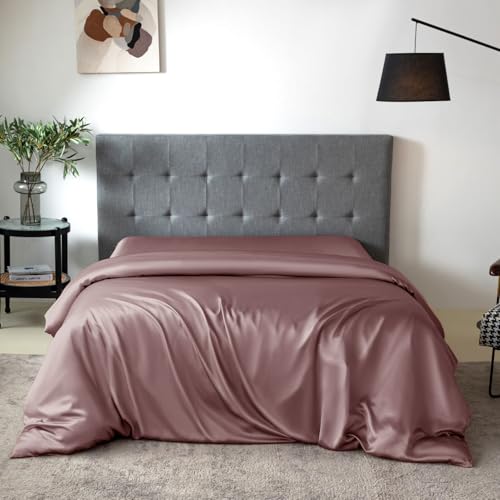
Real 7A+ grade Mulberry silk — the highest common commercial grade — gives this real tensile strength despite silk’s reputation for delicacy, and its naturally slippery surface is effective at letting hair slide off rather than embedding.
The seamless construction and zipper closure keep the premium feel consistent, and silk’s breathability works well year-round rather than being a single-season fabric.
This is the most expensive material on this list, and requires more careful laundering than cotton or bamboo — worth it specifically if premium feel and maximum hair-slip performance matter more than easy care to you.
Pros
- Real 7A+ grade Mulberry silk
- Real tensile strength despite delicate feel
- Naturally effective hair-slip performance
Cons
- Most expensive option, requires careful laundering
5. Nestl (Best Budget Microfiber)
Best Budget Microfiber

Last update on 2026-08-19 / Affiliate links / Images from Amazon Product Advertising API
- MaterialDouble-brushed microfiber
- Available SizesTwin through California King
- Best ForBudget-conscious buyers
Worth being direct, per the buyer’s guide above: this is an honest microfiber product, and while it’s soft and affordable, it won’t outperform a tight-weave percale or sateen for pure hair resistance. It’s a reasonable budget pick, not the top performer for this specific use case.
The double-brushed microfiber is soft and breathable, with OEKO-Tex Standard 100 certification confirming it’s free from harmful substances. Button closure and 8 interior ties keep the duvet insert secure.
Nestl backs it with a real 100% satisfaction guarantee, a real practical reassurance if you’re unsure about committing to a new material.
Pros
- Affordable
- OEKO-Tex certified, soft double-brushed feel
- Real satisfaction guarantee
Cons
- Won’t outperform tight-weave cotton for hair resistance specifically
6. Bedsure (Best Value Microfiber)
Best Value Microfiber
Last update on 2026-08-19 / Affiliate links / Images from Amazon Product Advertising API
- MaterialDouble-brushed microfiber
- Available SizesTwin through King
- Best ForTightest budget, kid and pet households
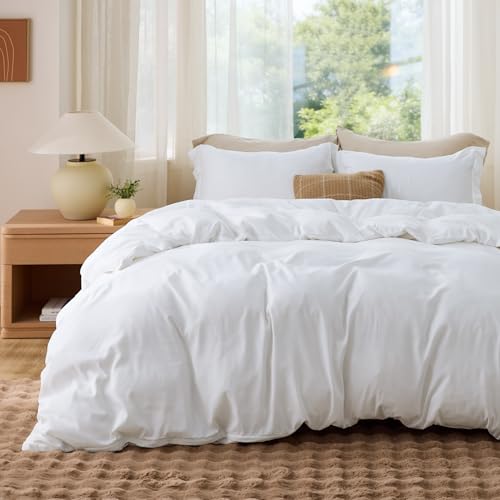
Genuinely tested in a real household with both a young child and a dog, per an independent editorial review — a real-world stress test most listings don’t get. It’s affordable, machine washable with no special care requirements, and easy to close.
Like the Nestl pick, this is honestly a microfiber product and won’t match percale or sateen for pure hair-release performance, but it’s a solid, practical choice at the lowest price point on this list.
Zipper closure (on some variants) makes it faster to change than button closures, a real practical plus for frequent washing in a hair-heavy household.
Pros
- Tested in a real kid-and-dog household
- Tightest budget on this list
- Easy care, simple closure
Cons
- Won’t outperform tight-weave cotton for hair resistance specifically
Which Duvet Cover Should You Buy?
| Situation | Pick |
|---|---|
| Not sure where to start | Coyuchi |
| Want a smoother, warmer feel than percale | California Design Den |
| Dog adds a lot of warmth to the bed | DOZ by SIJO |
| Want the most premium option | THXSILK |
| Budget-conscious, want a trusted brand | Nestl |
| Tightest budget, real kid-and-pet household use | Bedsure |
Duvet Covers for Dogs FAQ
Is microfiber really the best fabric for repelling dog hair?
Not automatically. Tight-weave, smooth fabrics — cotton percale and sateen specifically — outperform microfiber for hair release, since the mechanism is weave tightness and surface smoothness, not the specific fiber type. High-quality microfiber performs reasonably well, but lower-quality or loosely-woven versions can actually attract more hair via static.
Does a higher thread count always mean better hair resistance?
Not past a certain point, and “up to 1000 thread count” claims are often misleading. Genuine, honest single-ply cotton rarely exceeds 400-600 real thread count; higher claims usually count multi-ply threads individually, a known deceptive marketing practice. A real 300-400 thread count percale or sateen performs excellently.
How many dog owners actually sleep with their dogs?
Estimates vary by survey methodology, from 43% (the most established source, APPA’s National Pet Owners Survey) up to 74-78% in some newer surveys. A commonly cited “55%” figure is often misattributed — that number traces back to cat owners in the survey it originated from, not dogs specifically.
What should I do about accidents or vomiting, not just hair?
No duvet cover material fully protects against liquid reaching your mattress. Add a waterproof mattress protector or throw underneath for that specific concern — the duvet cover material choice is really about hair and general wear, not liquid protection.
Final Thoughts
Weave tightness and surface smoothness matter more than the specific fabric name — percale and sateen outperform microfiber for hair resistance, with bamboo and silk as real premium alternatives. Whatever you choose, check your washer’s drum capacity before committing to a full-size cover, and add a waterproof layer underneath if accidents are a real concern beyond just hair.