
Rebuilt with the root-cause framing and 5 verified current picks
Before picking a device, it’s worth asking why your dog is actually barking. Attention-seeking, boredom, territorial alerting, and anxiety all look similar from the outside but call for different responses — a bark collar can suppress the symptom without addressing anxiety-driven barking at all, and in that specific case, it can make things worse rather than better.
One claim worth correcting directly: an approved device won’t automatically “not harm your pet in any way.” Misuse causes real harm; proper use with the lowest effective setting and a full introduction period doesn’t. That’s especially true for small dogs — their smaller size means less room for error, and several truly humane, no-shock options exist specifically because static correction isn’t necessary for most small-dog barking situations.
Below, we cover what actually matters, plus 5 current picks — each solving a different situation, not another near-identical white-label collar.
Editor’s Pick
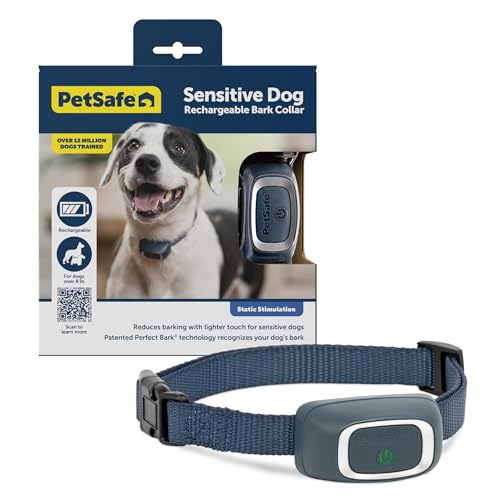

Last update on 2026-08-19 / Affiliate links / Images from Amazon Product Advertising API
Built specifically for timid and little dogs, starting at the lowest correction level and only increasing if barking continues — the safety principle this whole guide is built around, implemented directly in the product.
What’s Inside!
Why Dogs Actually Bark

A few distinct causes cover most cases. Attention-seeking barking is learned — if barking has ever reliably gotten a response, a dog will keep using it. Boredom shows up in dogs without enough physical or mental stimulation. Territorial or alert barking responds to people, animals, or activity near the home. Anxiety, including separation anxiety specifically, is different from the others — it usually comes paired with other signs like pacing, destruction, or accidents, and Cornell’s veterinary college notes that fear-driven barking is often part of broader reactivity, not a standalone behavior a device alone will fix.
If barking is new, sudden, or paired with other behavior changes, rule out a medical cause before assuming it’s purely behavioral. And if you’ve identified anxiety as the actual driver, a bark collar isn’t the right primary tool — punishing an anxious dog for expressing distress can actually increase the anxiety rather than resolve it. Address the underlying cause with a vet or behaviorist first.
What to Actually Look For
Mechanism. Beep and vibration are actually sufficient for most small dogs. Static correction exists and can be adjusted safely, but it’s not automatically necessary — several well-reviewed collars skip it entirely.
Adjustable, low-starting levels. A collar that starts at the lowest setting and escalates only if needed is safer than one that jumps straight to a fixed intensity.
Dual-sensor detection. Collars that require both vibration (from your dog’s own vocal cords) and sound before triggering are less prone to false corrections from another dog barking nearby.
Fit for a truly small dog. Check the actual weight and neck-size range rather than assuming “adjustable” covers it — a collar built for an 8-plus-pound dog may simply be too bulky for a true toy breed.
Bark Collar Comparison Table


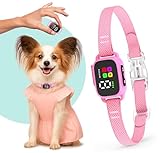
Last update on 2026-08-19 / Affiliate links / Images from Amazon Product Advertising API
Bark Collar Reviews
1. PetSafe Lite (Best for Timid/Anxious Dogs)
Best for Timid/Anxious Dogs
Last update on 2026-08-19 / Affiliate links / Images from Amazon Product Advertising API
- Mechanism15 auto-adjusting static levels, starts lowest
- DetectionDual sensor, sound plus vibration
- Best ForDogs 8lb+, timid or easily startled temperaments
Built specifically for the “Timid/Little Dogs” category — a compact collar with noticeably gentler stimulation than the standard version, not just a smaller shell around the same internals.
The standout is the auto-adapting temperament feature: correction starts at the lowest level and only increases if barking continues, then automatically reduces again as behavior improves. Dual detection (vibration plus sound) means your dog isn’t corrected for another dog’s bark or nearby noise.
It’s still a static-correction collar, so for an owner who wants no static option at all, DogRook below is the better fit.
Pros
- Genuine low-start, auto-adapting correction levels
- Dual-sensor detection prevents false triggers
- Built specifically for small, timid dogs
Cons
- Still uses static correction, even if minimal
2. DogRook (Best No-Shock)
Best No-Shock

Last update on 2026-08-19 / Affiliate links / Images from Amazon Product Advertising API
- MechanismBeep and vibration only, no static option
- BatteryUp to 14 days
- Best ForOwners who want static correction off the table entirely
A truly humane-only design — this isn’t a shock collar with the static feature disabled, the mechanism itself is limited to beep and vibration, escalating between the two automatically as needed.
Real, positive word of mouth backs this up: one reader directly commented on the original version of this article that a friend’s DogRook worked well specifically because it lacked a shock feature.
No remote control means you can’t manually trigger a correction from a distance — a fair tradeoff for the simplicity of a fully automatic, no-shock design.
Pros
- Genuinely no-shock by design, not just switchable
- Real positive owner feedback
- Long battery life
Cons
- No remote control option
3. Dogtra Smart NOBARK (Best Smart/App-Connected)
Best Smart/App-Connected

Last update on 2026-08-19 / Affiliate links / Images from Amazon Product Advertising API
- DetectionTriple detection accuracy, whining and barking
- ConnectivityApp notifications, 33ft range
- Best ForCompact dogs down to 10lb, owners wanting behavior tracking
Dogtra is an established name in the training-collar category, and this model brings that credibility to a distinctly different feature set — real app connectivity sends notifications and a behavior report, letting you actually see barking patterns rather than guessing.
Detecting whining in addition to barking is a meaningful expansion — whining often signals anxiety or distress rather than the alert or attention-seeking barking a standard sensor catches. IPX9K waterproofing is a notably higher rating than most competitors offer.
The smart features come at a genuine price premium over simpler collars, and the added complexity may be more than some owners want for a straightforward barking issue.
Pros
- Established brand, real app connectivity and behavior tracking
- Detects whining as well as barking
- Notably high IPX9K waterproof rating
Cons
- Priced above simpler collars, more complexity than some need
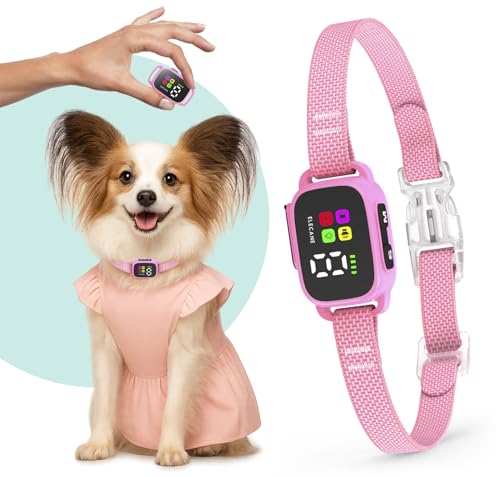
4. Tiny Bark Collar (Best for Truly Tiny Dogs)
Best for Truly Tiny Dogs
Last update on 2026-08-15 / Affiliate links / Images from Amazon Product Advertising API
- MechanismNo shock, beep and vibration, 7 sensitivity levels
- Sizing5-15lbs specifically
- Best ForGenuinely small dogs and puppies
Sized specifically for 5-15 pound dogs — the closest match to this article’s actual angle, rather than a standard collar marketed as fitting “all sizes” that happens to have a small enough strap setting.
No-shock by design, with 7 sensitivity levels and 3 combined beep-and-vibration modes, giving genuine gradation without ever introducing static correction as an option.
The sizing that makes it well-fitted for a truly small dog also means it’s not built to scale up if you have a larger dog too — a purpose-specific design rather than a universal one.
Pros
- Genuinely sized for 5-15lb dogs specifically
- No-shock design with genuine sensitivity gradation
- Built for puppies as well as small adult dogs
Cons
- Not designed to scale up for larger dogs
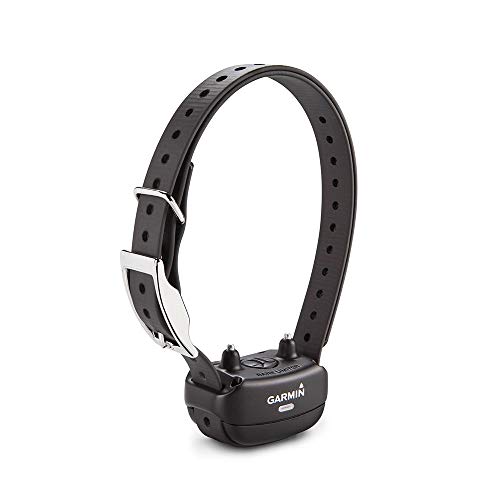
5. Garmin BarkLimiter Deluxe (Best Premium/Established Brand)
Best Premium/Established Brand
Last update on 2026-08-19 / Affiliate links / Images from Amazon Product Advertising API
- HeritageBuilt on Tri-Tronics training technology
- AdjustabilityMultiple stimulation levels
- Best ForBuyers wanting an established brand pedigree
Real, checkable brand history: this model carries forward technology from Tri-Tronics, a well-respected name in training collars before Garmin’s acquisition — not a new entrant borrowing credibility it hasn’t earned.
Multiple stimulation levels allow the same low-and-slow approach this guide recommends throughout, and Garmin’s broader reputation for reliability in pet tech carries over to backing and support.
It’s priced at the premium end of this list — a fair cost for the brand pedigree and build quality behind it.
Pros
- Real Tri-Tronics/Garmin brand heritage
- Multiple adjustable stimulation levels
- Established reliability and support
Cons
- Priced at the premium end of this category
Which Bark Collar Should You Buy?
| Situation | Pick |
|---|---|
| Timid or anxious small dog | PetSafe Lite |
| Want static correction off the table entirely | DogRook |
| Want app notifications and behavior tracking | Dogtra Smart NOBARK |
| Genuinely tiny dog, 5-15lbs | Tiny Bark Collar |
| Want an established premium brand | Garmin BarkLimiter Deluxe |
Bark Collars for Small Dogs FAQ
Is it true that an approved bark collar can’t harm my dog?
Not quite. Misuse — jumping straight to a high stimulation level, skipping a proper introduction — can cause genuine stress or harm. Proper use, starting at the lowest effective setting with a full introduction period, doesn’t. This is true of bark collars the same way it’s true of training collars generally.
My dog barks when I leave. Will a bark collar fix this?
Possibly not on its own. If the barking is driven by separation anxiety specifically, a bark collar addresses the symptom without the underlying cause, and punishing anxious behavior can actually make the anxiety worse. Look for other signs of anxiety — pacing, destruction, accidents when alone — and address those with a vet or behaviorist if present.
Do small dogs need a different collar than large dogs?
Yes, in practical terms. A collar rated for “all sizes” that happens to have a small enough strap setting isn’t the same as one truly sized and weighted for a toy breed. Check actual weight range and collar bulk, not just adjustability.
Should I start with a no-shock option before trying static correction?
For most small dogs, yes — beep and vibration are often sufficient, and several well-reviewed collars use no-shock mechanisms entirely. If those truly don’t work after a fair trial, a low-starting, auto-adjusting static option is the next reasonable step, not a stronger version of the same non-static tool.
Final Thoughts
Figure out why your dog is actually barking before choosing a device — the right response to boredom is different from the right response to anxiety. Whatever collar you choose, start at the lowest effective setting, and if anxiety turns out to be the actual driver, treat the cause directly rather than expecting a collar to solve it alone.



My friend Sam owns a DogRook bark collar and it’s working very good, I was looking for some references to buy it, and so I found on this website. The best thing, it doesn’t have a shock feature.
This is exactly what I was looking for, thank you twodogzoo
Thanks for share this article it is quite helpful to me.
Best regards,
Boswell Griffin