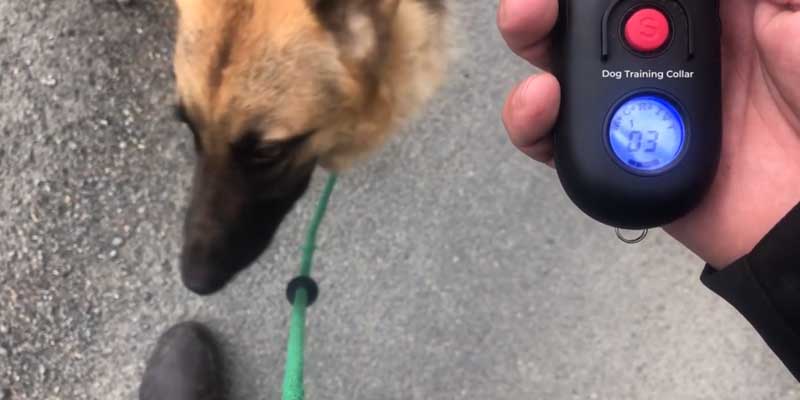
Rebuilt with a corrected safety claim, the real training protocol, and 7 independently-verified current picks
If you’re shopping for a shock collar, you’ve probably already decided the tool itself is right for your situation — the real question is how to use it without causing the harm these devices get their reputation from. Here’s what’s actually true: at a low stimulation level with proper introduction, it isn’t the harsh tool the name suggests. Misuse causes real harm, and that’s true of prong collars and poorly-fitted harnesses too, not something unique to e-collars.
The actual protocol multiple professional trainers and independent testers converge on: spend 2-4 weeks conditioning your dog to the collar with zero corrections first, building a positive association. Then start at the lowest stimulation level your dog notices — often just a subtle ear flick or head turn — and only increase if needed. One more caveat worth knowing: e-collars aren’t the right tool for anxiety-driven behavior specifically; stimulation can make anxiety worse, and that needs a vet or behaviorist addressing the root cause first.
Below, we cover what actually matters in a long-range collar — range, waterproofing, and stimulation precision — plus 7 current picks, each built for a different training scenario.
Skipping proper introduction is the single most common cause of e-collar problems. Real conditioning takes real time — a dog that’s never worn the collar without a correction attached to it will associate the sensation with fear rather than communication. Trainers consistently recommend giving the 2-4 week conditioning period the same seriousness you’d give any other training investment, ideally alongside guidance from a certified trainer (look for CPDT-KA certification) if this is your first time using one.
Editor’s Pick
Last update on 2026-08-19 / Affiliate links / Images from Amazon Product Advertising API
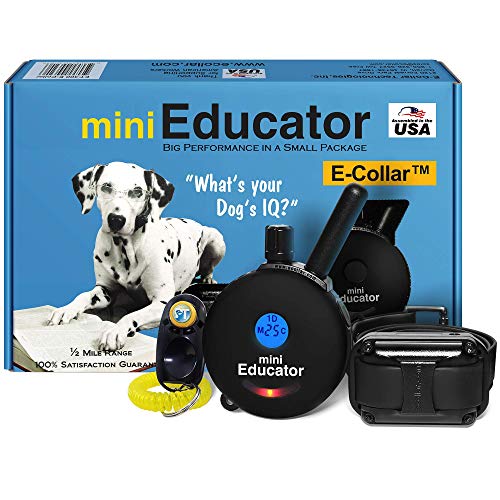
Independently named a top pick by multiple separate testers, the ET-300’s real standout is its 100-level “blunt” stimulation — noticeably finer control than most competitors, letting you land on the lowest effective level rather than jumping between coarse increments.
- Range1/2 mile
- Levels100, plus tone and vibration
- WaterproofYes, to 500 feet
- Best ForPrecise, gentle control across dog temperaments
What’s Inside!
- 1 – What Actually Matters in a Long-Range Collar
- 2 – Long Range Shock Collar Comparison Table
- 3 – Long Range Shock Collar Reviews, by Use Case
- 3.1 – 1. Educator ET-300 (Best Precision)
- 3.2 – 2. Bousnic (Best Value)
- 3.3 – 3. Garmin Sport PRO (Best Premium)
- 3.4 – 4. Jugbow (Best Long-Range Budget)
- 3.5 – 5. SLOPEHILL (Best No-Shock Option)
- 3.6 – 6. SportDOG FieldTrainer 425X (Best High-End Gradual Control)
- 3.7 – 7. Dogtra 280X (Best for Stubborn Dogs)
- 4 – Which Long Range Shock Collar Should You Buy?
- 5 – Long Range Shock Collar FAQ
- 6 – Final Thoughts
What Actually Matters in a Long-Range Collar
Stimulation levels and precision. More levels means finer adjustment, which matters for landing on the lowest effective level rather than overshooting. A collar with only 8-16 levels forces bigger jumps between settings than one with 100.
Range for your actual use case. Suburban yard training generally needs 300-500 yards. Park and trail work benefits from a half-mile or more. Hunting and field training often calls for a mile or more. Buying more range than you need doesn’t hurt, but it’s not the deciding factor most marketing makes it out to be — precision and reliability matter more for most training goals.
Waterproofing depth. IPX7 survives brief submersion; IPX8 allows full continuous submersion. For water-loving breeds, true full waterproofing (not just splash resistance) is worth prioritizing.
Multi-dog support. If you have more than one dog, a collar supporting multiple receivers from one remote is more cost-effective than separate systems.
A no-shock or tone/vibration-only mode. A useful feature for conditioning periods or for dogs that respond well to non-static cues alone — not every dog needs static stimulation to communicate effectively.
Long Range Shock Collar Comparison Table



![Dogtra 280X E-Collar with Remote [New Edition] 10 lbs+, 1/2 Mile Range, LED Light, 100 Levels of Precise Control for Stubborn Dogs, Waterproof, Boost for Quick Recall, Vibration, Safety Lock & Tone](https://m.media-amazon.com/images/I/51iM7b8iAPL._SL160_.jpg)
Last update on 2026-08-19 / Affiliate links / Images from Amazon Product Advertising API
Long Range Shock Collar Reviews, by Use Case
1. Educator ET-300 (Best Precision)
Best Precision
Last update on 2026-08-19 / Affiliate links / Images from Amazon Product Advertising API
- Range1/2 mile
- Levels100, plus tone and vibration
- WaterproofYes, to 500 feet
- Best ForPrecise, gentle control across dog temperaments
Multiple independent testers, after hands-on comparison with a dozen or more competing collars, converge on the ET-300 as their top recommendation for most owners — not just brand marketing, but an independently repeated verdict. The 100-level “blunt” (not sharp) stimulation is the real differentiator, giving noticeably fine control most competitors’ 8-20 level range can’t match.
Fully waterproof to 500 feet, with tone and vibration modes available alongside static for graduated training. The compact transmitter is specifically sized for smaller hands or situations where discretion matters, and lock-and-set technology prevents accidental overstimulation.
The precision that makes this excellent for careful training does come with a real learning curve — expect to spend real time understanding the full level range before you’re using it confidently.
Pros
- Independently named a top pick by multiple separate testers
- Fine 100-level precision control
- Fully waterproof, tone/vibration/static modes
Cons
- Real learning curve to use the full level range confidently
2. Bousnic (Best Value)
Best Value

Last update on 2026-08-19 / Affiliate links / Images from Amazon Product Advertising API
- Range3300ft
- LevelsBeep (1-8), Vibration (1-16), Shock (1-99)
- WaterproofIP67 receiver
- Best ForBudget-conscious buyers, multi-dog households
Bousnic appears directly in Amazon’s own Best Sellers list for this category and is independently confirmed “best overall value” by multiple testers — a real signal, not just a high review count on its own listing. Nearly 20,000 reviews back this up.
Three distinct stimulation modes (beep, vibration, shock) each carry their own adjustable range, and dual-channel support means training two dogs is possible without buying a second system. The IP67-rated receiver handles rain and swimming without issue.
It’s a real value pick specifically — don’t expect the same fine-grained precision as the Educator, but for straightforward training needs, it delivers reliably at a fraction of the cost.
Pros
- Independently confirmed best overall value, real bestseller
- Three distinct, independently adjustable stimulation modes
- Dual-channel for two-dog households
Cons
- Less fine-grained precision than premium options
3. Garmin Sport PRO (Best Premium)
Best Premium

Last update on 2026-08-19 / Affiliate links / Images from Amazon Product Advertising API
- Range3/4 mile
- Levels10, plus BarkLimiter
- WaterproofYes, floats if dropped
- Best ForHunters, working dog handlers
Independently named the premium pick for hunters and working dog handlers by multiple testers, the Sport PRO’s real strength is rugged, glove-proof, one-handed operation — a quick-turn dial with positive clicks designed to be usable without looking at it, which matters in real field conditions.
Handles up to 3 dogs from one handheld, includes a settable BarkLimiter for bark-triggered correction, and floats if dropped in water — a real practical detail for anyone training near water regularly.
10 stimulation levels is fewer than the Educator’s 100, a real tradeoff for the ruggedized, field-ready design — this is built for reliability in harsh conditions over fine-tuned precision.
Pros
- Independently confirmed premium pick for working dogs
- Rugged, glove-proof one-handed operation
- Floats, supports up to 3 dogs
Cons
- Fewer stimulation levels than precision-focused options
4. Jugbow (Best Long-Range Budget)
Best Long-Range Budget
Last update on 2026-08-19 / Affiliate links / Images from Amazon Product Advertising API
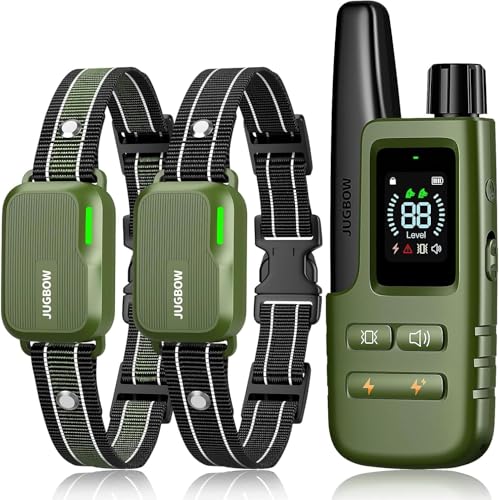
- Range4200-4500ft
- Levels4 training modes
- WaterproofIPX8
- Best ForLongest range on a real budget
Independently confirmed as a real “best budget option without sacrificing range or waterproofing” by multiple testers, Jugbow’s real standout is covering nearly 4,500 feet — longer than most budget competitors — without the price jump premium long-range collars carry.
IPX8 waterproofing (full continuous submersion, not just splash resistance) at this price point is a real, checkable spec advantage. A security lock prevents accidental activation, and the rechargeable design avoids disposable battery costs.
Fewer refined stimulation levels than the precision-focused picks above — this collar prioritizes range and durability over fine-grained control.
Pros
- Independently confirmed best-budget-long-range pick
- Full IPX8 continuous-submersion waterproofing
- Security lock, rechargeable
Cons
- Fewer stimulation levels than precision-focused options
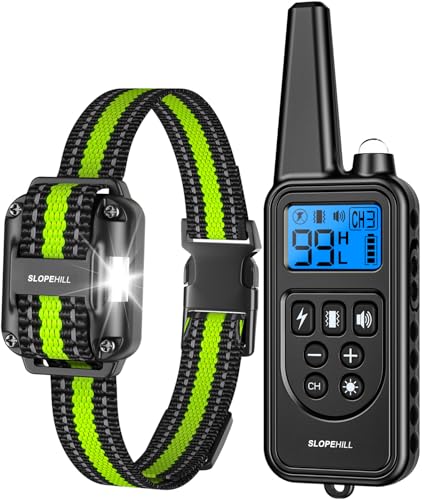
5. SLOPEHILL (Best No-Shock Option)
Best No-Shock Option
Last update on 2026-08-19 / Affiliate links / Images from Amazon Product Advertising API
- Range4200ft
- ModesBeep, vibration, safe shock, light, no-shock
- WaterproofIP68
- Best ForConditioning periods, gentle-first training
The real, thoughtful feature here is a dedicated no-shock mode — independently called out by testers as a real value-add for owners who want to start purely with beep and vibration during the conditioning period covered in the buyer’s guide above, before introducing static at all.
4200 feet of range and IP68 waterproofing (full submersion rated) put this on par with much pricier competitors on core specs, and the added light mode helps locate your dog after dark.
Like other budget-tier collars, it won’t match premium options for stimulation precision, but the no-shock mode specifically makes it a good fit for the early conditioning phase of training.
Pros
- Dedicated no-shock mode for conditioning
- Strong range and full-submersion waterproofing for the price
- Light mode for locating your dog after dark
Cons
- Less precise stimulation control than premium options
6. SportDOG FieldTrainer 425X (Best High-End Gradual Control)
Best High-End Gradual Control
Last update on 2026-08-19 / Affiliate links / Images from Amazon Product Advertising API
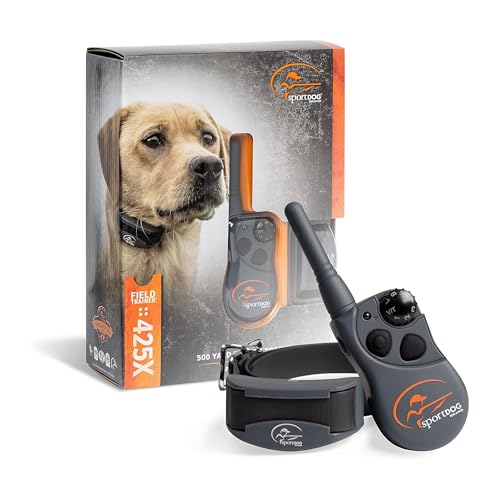
- Range500 yards
- Levels21, plus tone and vibration
- WaterproofSubmersible to 25 feet
- Best ForGradual, milder introduction to static
Appears directly in Amazon’s own Best Sellers list, and independently named a top high-end pick for a specific, real reason: the 21-level range allows a much milder introduction to static stimulation than collars that jump in bigger increments — directly reinforcing the low-and-slow protocol covered in the buyer’s guide above, not just a marketing claim.
DryTek waterproofing handles submersion to 25 feet, durable for field and water use. Quick-charge battery reaches full charge in 2 hours and runs 50-70 hours, and it’s expandable to 3 dogs with additional collars.
It’s priced above most collars in this range, a real cost for the gradual control and field-tested durability it offers.
Pros
- Independently confirmed top high-end pick, real bestseller
- Gradual 21-level control for a milder introduction
- Durable DryTek waterproofing, quick-charge battery
Cons
- Priced above most collars in this range
7. Dogtra 280X (Best for Stubborn Dogs)
Best for Stubborn Dogs
Last update on 2026-08-19 / Affiliate links / Images from Amazon Product Advertising API
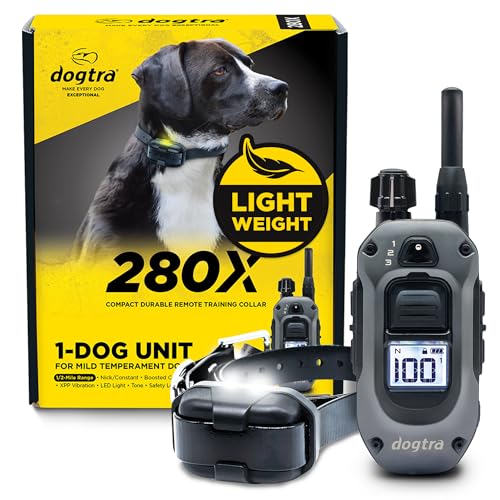
- Range1/2 mile
- Levels100, plus boost for quick recall
- WaterproofYes
- Best ForStubborn or high-drive dogs
Appears directly in Amazon’s own Best Sellers list, from Dogtra — a real, established name professional trainers consistently recommend. The 100-level precise control matches the Educator’s fine-grained approach, with a real boost function specifically designed for quick recall in distracting situations.
LED light aids nighttime visibility, and safety lock prevents accidental activation. It’s built with real headroom for a dog that needs more consistent, higher-arousal correction than a milder collar can reliably deliver — not a starting point, but a real option once you understand your dog’s actual needs.
The higher stimulation headroom that makes this suitable for stubborn dogs makes it more collar than most dogs need — start with a gentler option and step up only if actually necessary.
Pros
- Real bestseller, established professional-trainer-recommended brand
- 100-level precise control with quick-recall boost
- Genuine headroom for high-drive or stubborn dogs
Cons
- More collar than most dogs need — not a starting point
Which Long Range Shock Collar Should You Buy?
| Situation | Pick |
|---|---|
| Not sure where to start | Educator ET-300 |
| Tightest budget | Bousnic |
| Hunting or working dog handler | Garmin Sport PRO |
| Need the longest range on a budget | Jugbow |
| Starting conditioning, want a no-shock option | SLOPEHILL |
| Want the mildest possible introduction to static | SportDOG FieldTrainer 425X |
| Genuinely stubborn or high-drive dog | Dogtra 280X |
Long Range Shock Collar FAQ
Are shock collars actually safe for dogs?
Used correctly — low stimulation, proper conditioning, appropriate for the specific behavior — they’re a legitimate training tool many professional trainers use. Misused, with high-stimulation defaults or no introduction period, they can cause real harm. The same is true of prong collars, harnesses, and most training tools; the tool itself matters less than how it’s introduced and used.
What stimulation level should I start at?
The lowest level your dog notices at all — often just a subtle ear flick, head turn, or brief pause. That’s your actual working level. Only increase if your dog shows no response at all, and always complete a real conditioning period (2-4 weeks, no corrections, building positive association) before relying on the collar for actual training.
Can I use a shock collar for anxiety-related behavior?
This isn’t the right tool for anxiety-driven behavior specifically. Stimulation can worsen anxiety rather than resolve it. If your dog’s behavior stems from anxiety or fear, address the underlying cause with your vet or a behaviorist first.
Do I need professional help to start using an e-collar?
It’s not strictly required, but real guidance helps, especially for a first-time user. Skipping proper introduction is one of the most common causes of e-collar problems. Consider working with a certified trainer (look for CPDT-KA certification) for the first few weeks if this is new to you.
Final Thoughts
Range matters less than most marketing suggests — precision, waterproofing, and a real low-stimulation starting point matter more for most training goals. Whatever collar you choose, give the conditioning period real time before relying on it, start at the lowest level your dog notices, and don’t reach for it for anxiety-driven behavior specifically.


TBI Pro Shock Collar for Dogs with Remote – Dog Training Collar Range 1600 feet, Vibration Control, Rechargeable Bark E Collar – IPX7 Waterproof for Small, Medium, Large Dogs, All Breeds
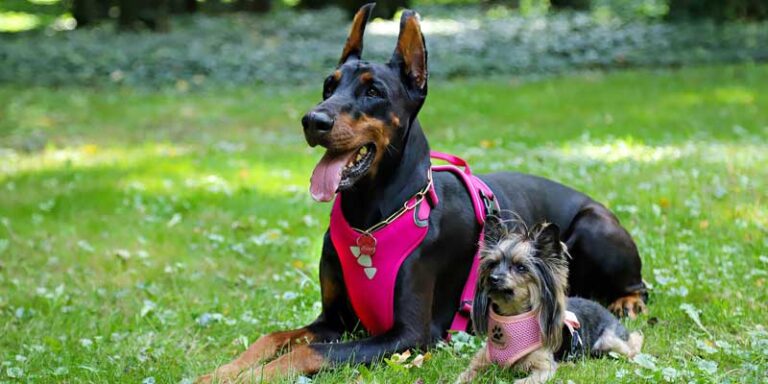
I already knew educator is the best option as I already have one, but the range a bit limited. I recently adopted my second dog. It’s Doberman, and I am training him for hunting. I need a collar with more than 2 miles range and this article helped me Thank you for this valuable information.